
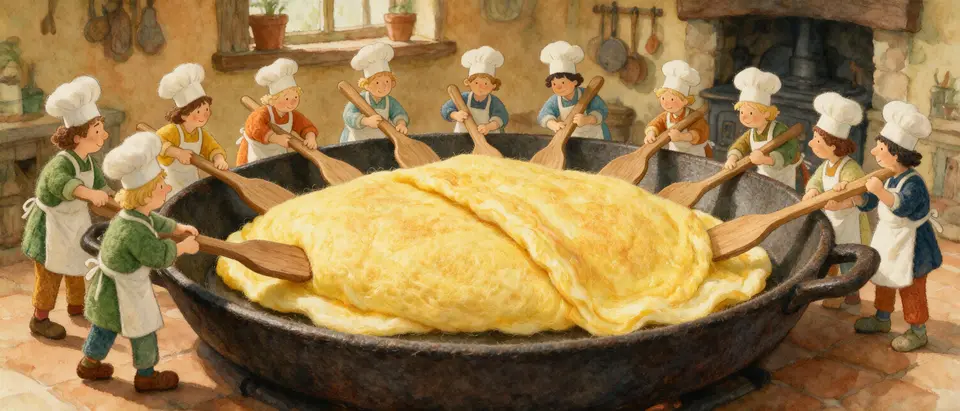
World’s Largest Omelette
A maior omelete do mundo foi feita em Portugal em dois mil e doze.The world's largest omelette was made in Portugal in two thousand and twelve. It was made by 55 people and weighed almost 6.5 tonnes. It contained 145,000 eggs, 400 litres of oil, and 100kg of butter.
See what it says in English
Click the sentence again to see the Portuguese
The Plus version of this story
A maior omelete do mundo foi feita em Portugal em dois mil e doze.
Foi feita por cinquenta e cinco pessoas e quase seis toneladas e meia. Levou cento e quarenta e cinco mil ovos, quatrocentos litros de óleo, e cem quilos de manteiga.
The world's largest omelette was made in Portugal in two thousand and twelve.
It was made by fifty-five people and weighed almost six and a half tonnes. It contained 145,000 eggs, 400 litres of oil, and 100 kilograms of butter.
Words in this story
Pesava (weighed)
This is the verb “pesar” (to weigh), conjugated in the imperfect past for the third person singular. “Pesar” can mean:
- ⚖️ To have a certain weight ➡ A omelete pesa seis toneladas (the omelette weighs six tonnes)
- 🍳 To weigh something ➡ Vamos pesar a omelete! (Let’s weigh the omelette!)
There is a Plus version of this story
The same story, taken further, for DailyNata Plus members. This one works on comparisons and superlatives.
- Whole story in both languages
- Key words explained
- 2 interactive exercises
- Level B1–B2