
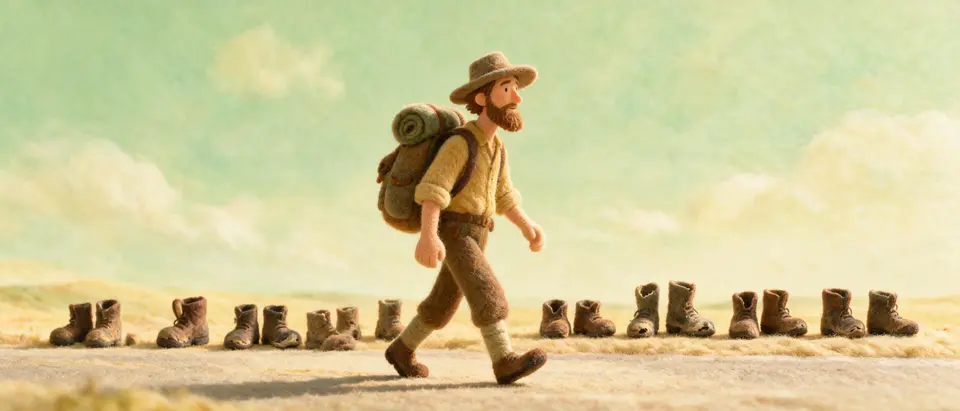
The Longest Walk Ever
The longest walk to ever take place was by George Meegan. He walked from the bottom of South America to the top of North America. He took forty-one million steps, gastou doze pares de sapatos, e arrecadou oito recordes mundiais!wore out twelve pairs of shoes, and collected eight world records!
See what it says in English
Click the sentence again to see the Portuguese
The Plus version of this story
A mais longa de sempre foi feita por George Meegan. Ele andou da da América do até ao da América do . Deu quarenta e um milhões de , doze pares de sapatos, e oito recordes mundiais!
The longest walk to ever take place was by George Meegan. He walked from the bottom of South America to the top of North America. He took forty-one million steps, wore out twelve pairs of shoes, and collected eight world records!
Today's vocabulary
🚶 Caminhada [femin. noun]: Walk🖍️ Ponta [femin. noun]: Extremity, tip⬇️ Sul [masc. noun]: South🏔️ Topo [masc. noun]: Top⬆️ Norte [masc. noun]: North👣 Passos [masc. noun]: Steps💸 Gastar: To spend🗃️ Arrecadar: To collect
There is a Plus version of this story
The same story, taken further, for DailyNata Plus members. This one works on idioms and expressions.
- Whole story in both languages
- Key words explained
- 2 more recordings
- 4 interactive exercises
- Level B1–B2