
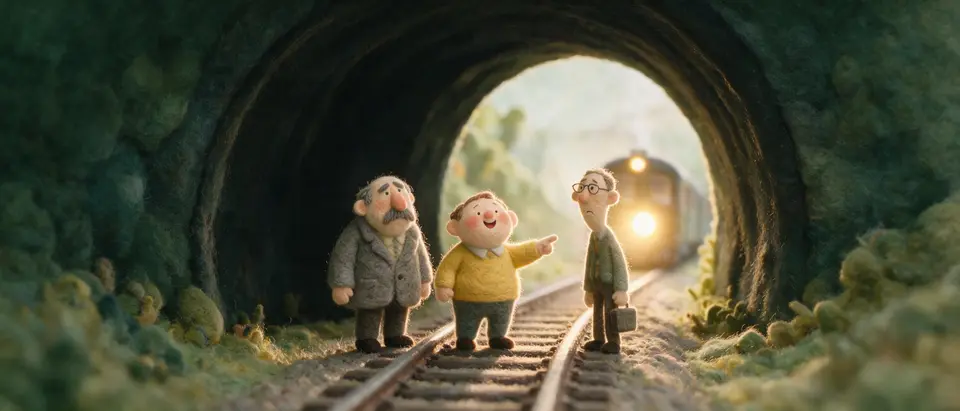
A Story About a Pessimist...
A story about a pessimist, an optimist and a realist…
A pessimist sees a dark tunnel. An optimist sees light at the end of the tunnel. A realist sees a freight train.
O maquinista vê três idiotas parados nos carris.The train driver sees three idiots standing on the tracks.
See what it says in English
Click the sentence again to see the Portuguese
The Plus version of this story
Uma um , um e um ...Um pessimista vê um . Um otimista vê a luz ao do túnel. Um realista vê um de . O maquinista vê três idiotas parados nos carris.
A story about a pessimist, an optimist and a realist...A pessimist sees a dark tunnel. An optimist sees light at the end of the tunnel. A realist sees a freight train.The train driver sees three idiots standing on the tracks.
Today's vocabulary
📖 História [femin. noun]: Story, history🏷️ Sobre: About🫤 Pessimista: Pessimist😁 Otimista: Optimist🙂 Realista: Realist🚇 Túnel [masc. noun]: Tunnel🌘 Escuro [masc. singular]: Dark⬇️ Fundo [masc. noun]: Bottom🚆 Comboio [masc. noun]: Train📦 Mercadorias [femin. noun]: Goods
There is a Plus version of this story
The same story, taken further, for DailyNata Plus members. This one works on idioms and expressions.
- Whole story in both languages
- Key words explained
- 2 interactive exercises
- Level B1–B2