
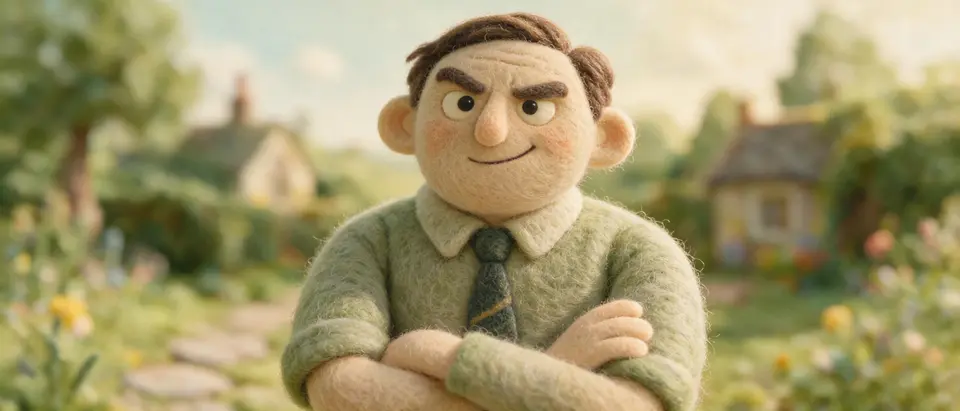
Interview Semantics
At a job interview: “What is unique about your communication style?"
Me: I answer based on semantics, not pragmatics.
Interviewer: Could you give me an example?
Me: Sim, sim, podia.Yes, yes, I could.
See what it says in English
Click the sentence again to see the Portuguese
The Plus version of this story
Numa de emprego: “O que é no seu de comunicação?”Eu: Eu com base na , não na .: Podia dar-me um ?Eu: Sim, sim, podia.
At a job interview: “What is unique about your communication style?”Me: I answer based on semantics, not pragmatics.Interviewer: Could you give me an example?Me: Yes, yes I could.
Today's vocabulary
💼 Entrevista [femin. noun]: Interview🌟 Único [masc. adjective]: Unique👠 Estilo [masc. noun]: Style🙋♂️ Responder: To answer📚 Semântica [femin. noun]: Semantics, meaning of words and language🧩 Pragmática [femin. noun]: Pragmatics, language use in context📝 Entrevistador [masc. noun]: Interviewer📌 Exemplo [masc. noun]: Example
There is a Plus version of this story
The same story, taken further, for DailyNata Plus members. This one works on idioms and expressions.
- Whole story in both languages
- Key words explained
- 8 more recordings
- 1 interactive exercise
- Level B1–B2