
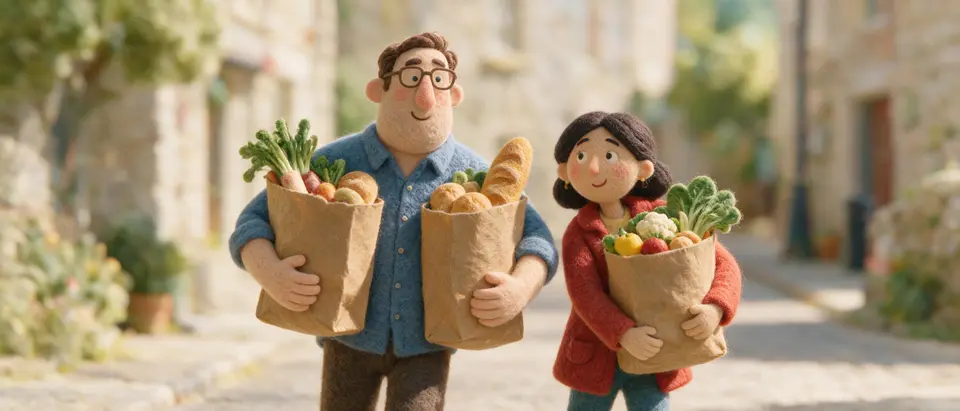
Getting Stronger
We are getting stronger;
Há vinte anos, era preciso dois adultos para transportar cinquenta euros em compras de mercearia.20 years ago, it took two adults to carry €50 worth of groceries.
Today, a 5-year-old can carry them!
See what it says in English
Click the sentence again to see the Portuguese
The Plus version of this story
Estamos mais fortes; Há 20 anos, era preciso dois adultos para transportar cinquenta euros em compras de mercearia.Hoje, uma criança de 5 anos pode carregá-las!
We are getting stronger; 20 years ago, it took two adults to carry €50 worth of groceries. Today, a 5-year-old can carry them!
Words in this story
A ficar (getting)
We use the verb “ficar” to express a transition to a new state in situations when in English we would use the verbs to “become,” “to get,” or “to go.” For example:
- 😠 Ele ficou zangado (He became angry);
- 📖 O livro ficou molhado (The book got wet);
- 🍎 A maçã ficou podre (The apple went rotten);
The word “ficar” also means “to stay,” like “Fica aqui!” (Stay here!).
It can also replace the verb “to be” when it indicates where something is. For example, “A farmácia fica no centro da cidade” (The pharmacy is in the city centre).
There is a Plus version of this story
The same story, taken further, for DailyNata Plus members. This one works on idioms and expressions.
- Whole story in both languages
- Key words explained
- Level A2