
From Bets to Bites
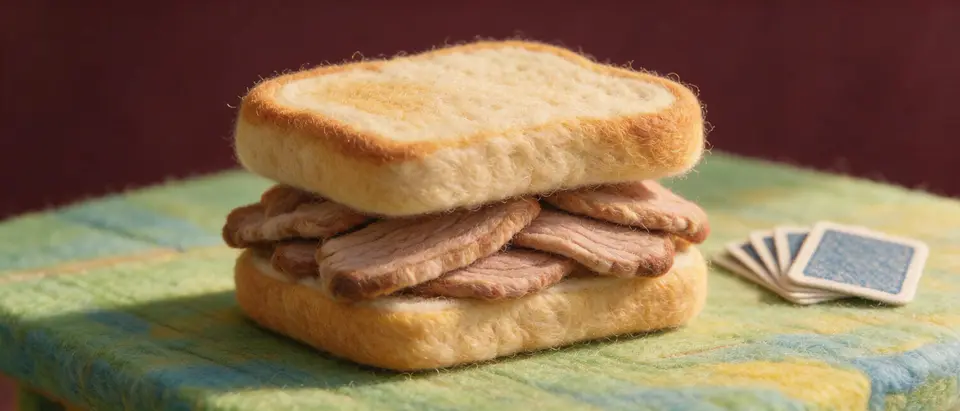
In the 18th century, John Montagu, Earl of Sandwich (a nobleman from England), loved gambling so much that he didn’t want to stop even to eat. One day, he asked for some meat to be placed between two slices of bread, so he could hold the food in one hand and keep playing cards with the other.
His friends saw this clever idea and started ordering “the same as Sandwich.”
This simple, handy meal became known as the sandwich and tornou-se uma das comidas mais populares do mundo!turned into one of the world’s most popular foods!
See what it says in English
Click the sentence again to see the Portuguese
The Plus version of this story
No XVIII, John Montagu, Conde de Sandwich (um nobre inglês), gostava de jogar que não queria parar nem para comer. Um dia, pediu que um pedaço de carne entre duas de pão, para que a comida numa mão e continuar a jogar cartas com a outra.
Os seus amigos viram esta ideia e começaram a pedir “o mesmo que o Sandwich.”
Esta simples e prática refeição passou a ser como ‘sandwich’ e tornou-se uma das comidas mais populares do mundo!
In the 18th century, John Montagu, Earl of Sandwich (a nobleman from England), loved gambling so much that he didn’t want to stop even to eat. One day, he asked for some meat to be placed between two slices of bread, so he could hold the food in one hand and keep playing cards with the other.
His friends saw this clever idea and started ordering ‘the same as Sandwich.’
This simple, handy meal became known as the sandwich and turned into one of the world’s most popular foods!
Today's vocabulary
⏳ Século [masc. noun]: Century📈 Tanto: So much🖋️ Pusessem [they/you - plural]: Put (imperfect subjunctive)🍰 Fatia [femin. noun]: Slice 🤔 Pudessem: [they/you - plural]: Could (imperfect subjunctive)✋ Segurar: To hold 💡 Engenhosa [femin. adjective]: Clever, ingenious📣 Conhecida [femin. adjective]: Known
There is a Plus version of this story
The same story, taken further, for DailyNata Plus members. This one works on pronunciation and spelling.
- Whole story in both languages
- Key words explained
- 1 more recording
- 1 interactive exercise
- Level B1–B2