
Speak like a local: Claro
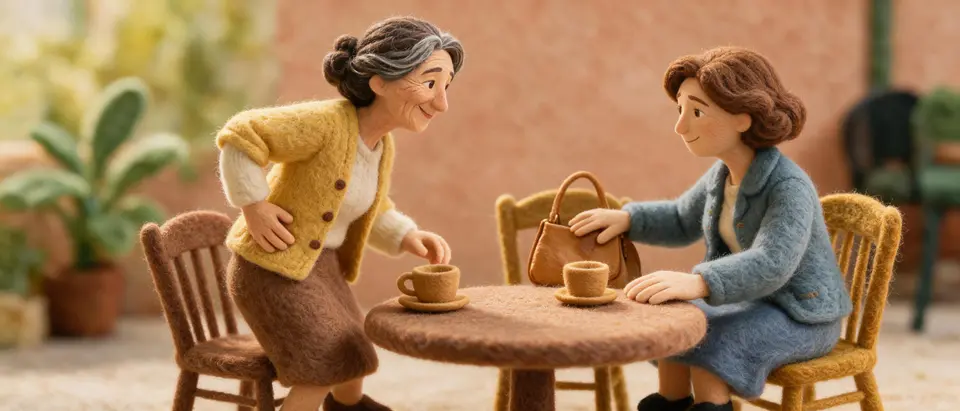
You are at a café with a friend and she needs to pop to the toilet. She asks if you can keep an eye on her bag for a minute. The answer is obviously yes, you do not even have to think about it. You just say 'claro' and she goes.
What it means
On its own, 'claro' means clear, or bright. As a reply it means of course, or sure. Portuguese people use it to agree when the answer feels obvious. Saying 'claro' is a quick, natural way to say yes without making a fuss about it. It is probably the most common way to say of course in everyday Portugal.
Who you can say it to
You can use this with anyone in normal daily life. If a friend asks whether you are coming to dinner, you reply 'claro' to say of course you are. If a colleague asks to borrow a pen, you hand it over with a 'claro'. If your child asks for one more story, you can say it too.
It is relaxed and friendly. In very formal writing you might pick something a bit more buttoned-up, but in speech it fits almost everywhere.
Words it travels with
This word loves the little word 'que'. People say 'claro que sim' for a strong yes, and 'claro que não' for of course not.
A very Portuguese habit is to put 'pois' in front of it. 'Pois claro' can mean of course, but with a sarcastic tone it means the opposite, a 'yeah, right' that really means no. You will also hear 'mas claro', which adds a friendly but of course.
More ways to say of course
If you want to stress there is no doubt at all, reach for this.
- 💯 Sem dúvida. (Without a doubt.)
If you want a softer, everyday alternative, use this.
- 👍 Naturalmente. (Naturally / of course.)
If you are in a more formal setting and want to sound a bit more serious, this works.
- 🎩 Evidentemente. (Obviously / clearly.)
A detail most foreigners miss is that 'claro' is doing a second job in the language. Its basic meaning is clear or bright, which is exactly why it works as of course: the answer is clear. The same word turns up in 'azul-claro' (light blue) and in 'uma explicação clara' (a clear explanation). Once you notice this, the of course meaning stops feeling random and starts to make sense.
A free Portuguese story every Saturday
A short story, quote or joke in European Portuguese, with the English and one word explained. Free, and you can stop any time.