
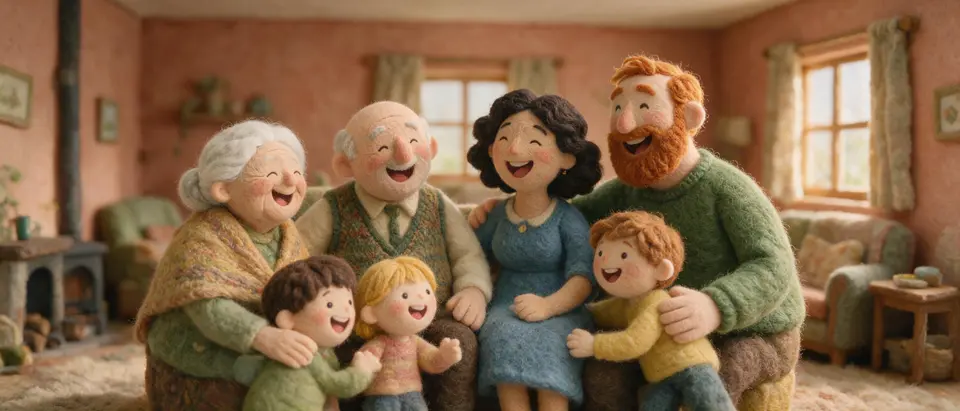
What Happiness Is
The following is a quote by George Burns:
Happiness is ter uma família grande, carinhosa e unida noutra cidade.having a large, caring, close-knit family in another city.
See what it says in English
Click the sentence again to see the Portuguese
The Plus version of this story
é ter uma família grande, e unida noutra cidade.
Happiness is having a large, caring, close-knit family in another city.
Words in this story
Felicidade (Happiness)
The plural of the word is used to wish for happiness and success: “Felicidades!” or “Muitas felicidades!”
The opposite of “felicidade” is “infelicidade.”
Just as in English, the prefix “in-” refers to deprivation or negation, as in “inativo” (inactive). It has variants (im-, ir- and i-). Some examples are: “Impossível” (impossible), “irracional” (irrational) and “ilegal” (illegal)
Carinhosa (caring)
There is a Plus version of this story
The same story, taken further, for DailyNata Plus members. This one works on word formation and suffixes.
- Whole story in both languages
- Key words explained
- Level A2