
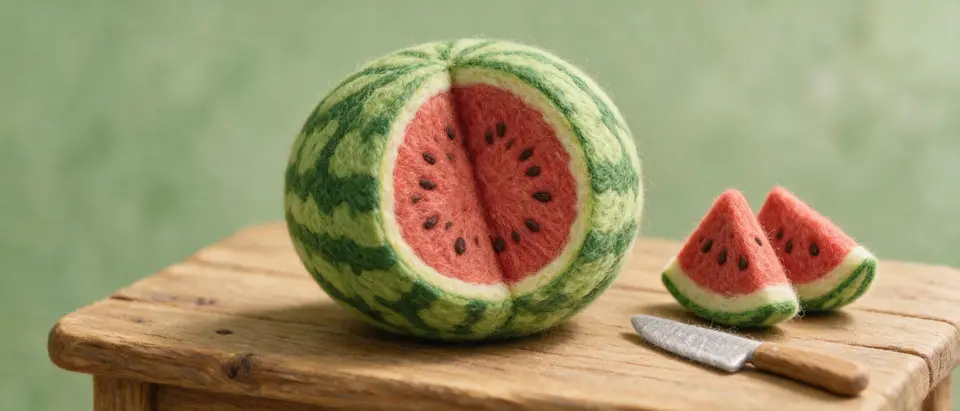
Watermelon
Unlike most fruits, uma melancia não continuará a amadurecer depois de ter sido colhida.a watermelon will not continue to ripen after it has been harvested. So you want to make sure you take home a ripe watermelon.
See what it says in English
Click the sentence again to see the Portuguese
The Plus version of this story
maioria dos frutos, uma melancia não continuará a amadurecer depois de ter sido colhida. Por isso, deve certificar-se que leva para casa uma melancia madura.
Unlike most fruits, a watermelon will not continue to ripen after it has been harvested. So you want to make sure you take home a ripe watermelon.
Words in this story
Ao contrário de (unlike)
In this case, the word “contrário” (opposite) is a masculine noun.
The words that surround it can convey very different meanings. For example:
- 🔄 Pelo contrário or muito pelo contrário (on the contrary/very much on the contrary) ➡ Ela não gosta de arroz. Muito pelo contrário, ela detesta arroz (She doesn't like rice. On the contrary, she hates rice)
- 👕 Ao contrário (the other way round/backwards/inside out) ➡ Vesti a camisa ao contrário (I dressed the shirt inside out)
- 🍚 Ao contrário de (unlike/contrary to) ➡ Eu, ao contrário de ti, adoro arroz (I, unlike you, love rice).
The expression used in the story is “ao contrário de,” but the preposition “de” (of) is contracted with the definite article “a” (the) becoming “da.”
There is a Plus version of this story
The same story, taken further, for DailyNata Plus members. This one works on false friends and confusables.
- Whole story in both languages
- Key words explained
- Level B1–B2