
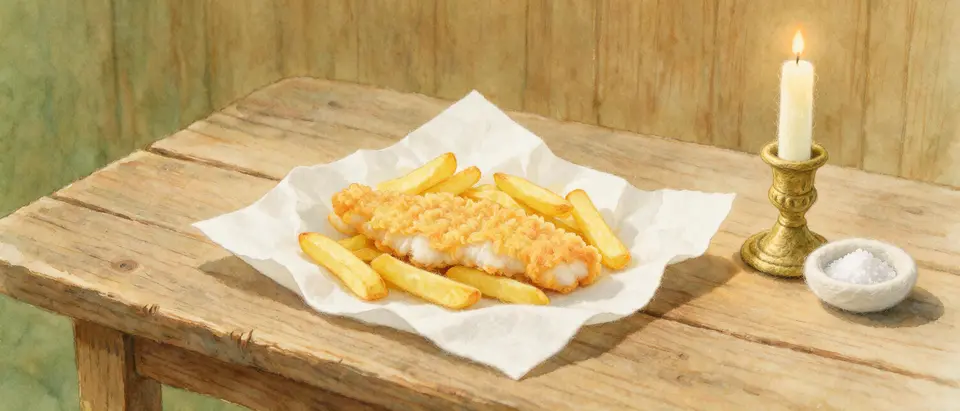
The Surprising Origins of Fish & Chips
The British tradition of Fish and Chips has an interesting history. It originates from the Spanish and Portuguese Jewish immigrants who arrived in the 16th century.
Jewish law forbids cooking with fire or electricity on the Sabbath, making food preparation impossible. To get around this, they started frying the fish on Friday night. This way, podiam saboreá-lo em segurança no dia seguinte.they could safely enjoy it the next day.
See what it says in English
Click the sentence again to see the Portuguese
The Plus version of this story
A tradição britânica de Fish and Chips ( com ) tem uma história interessante. Tem origem nos imigrantes judeus espanhóis e portugueses que chegaram no século XVI (dezasseis). A judaica cozinhar com ou eletricidade no Sabbath, tornando impossível a preparação de . Para esta situação, começaram a fritar o peixe na sexta-feira à noite. Desta forma, podiam em segurança no dia .
The British tradition of Fish and Chips has an interesting history. It originates from the Spanish and Portuguese Jewish immigrants who arrived in the 16th century. Jewish law forbids cooking with fire or electricity on the Sabbath, making food preparation impossible. To get around this, they started frying the fish on Friday night. This way, they could safely enjoy it the next day.
Today's vocabulary
🐟 Peixe [masc. noun]: Fish🥔 Batata [femin. noun]: Potato🍟 Frita [femin. adjective]: Fried♟️ Lei [femin. noun]: Law🚫 Proibir: To forbid🔥 Fogo [masc. noun]: Fire🍲 Alimentos [masc. noun]: Foods↪️ Contornar: To bypass, to get around😋 Saborear: To savour⏭️ Seguinte [masc. and femin. adjective]: Next, following
There is a Plus version of this story
The same story, taken further, for DailyNata Plus members. This one works on culture and traditions.
- Whole story in both languages
- Key words explained
- 3 more recordings
- 2 interactive exercises
- Level A2–B1